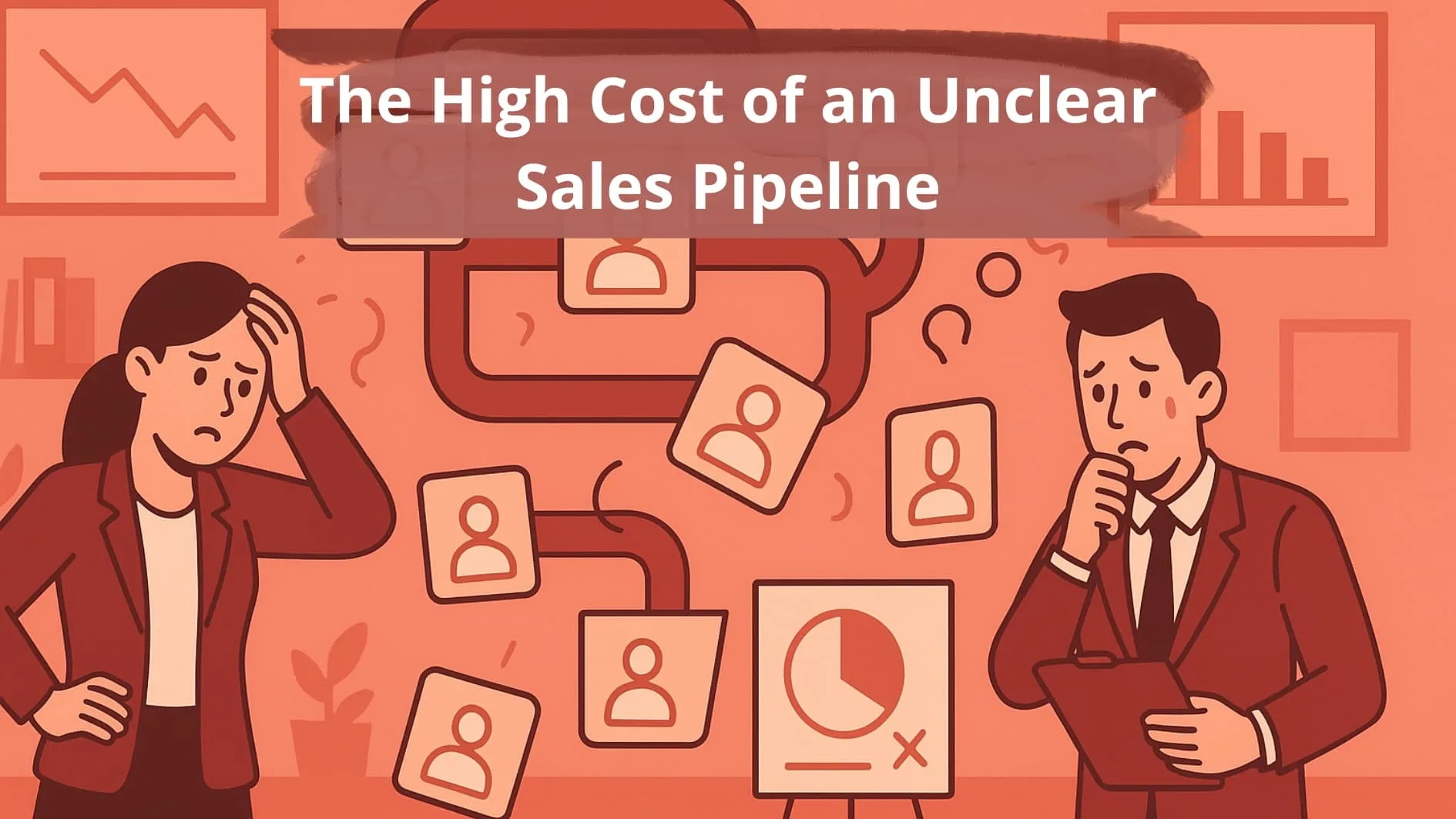
A well-built B2B sales pipeline is the backbone of a strong sales strategy. It gives your team a clear path from lead to close, improves forecasting, and increases your win rate. At Hyperke, we’ve seen how a structured pipeline turns scattered efforts into steady results. When every stage is defined and aligned with how your buyers make decisions, deals move faster and with less guesswork.
In this guide, we’ll walk through how to build a strategic B2B sales pipeline that helps your team close more deals. Keep reading to see how it’s done.
Key Takeaways
Define pipeline stages that match your buyer’s journey to track progress clearly.
Set objective criteria for moving leads through stages to avoid guesswork and pipeline inflation.
Use data-driven reviews regularly to keep your pipeline clean, accurate, and focused on closing deals.
The High Cost of an Unclear Sales Pipeline
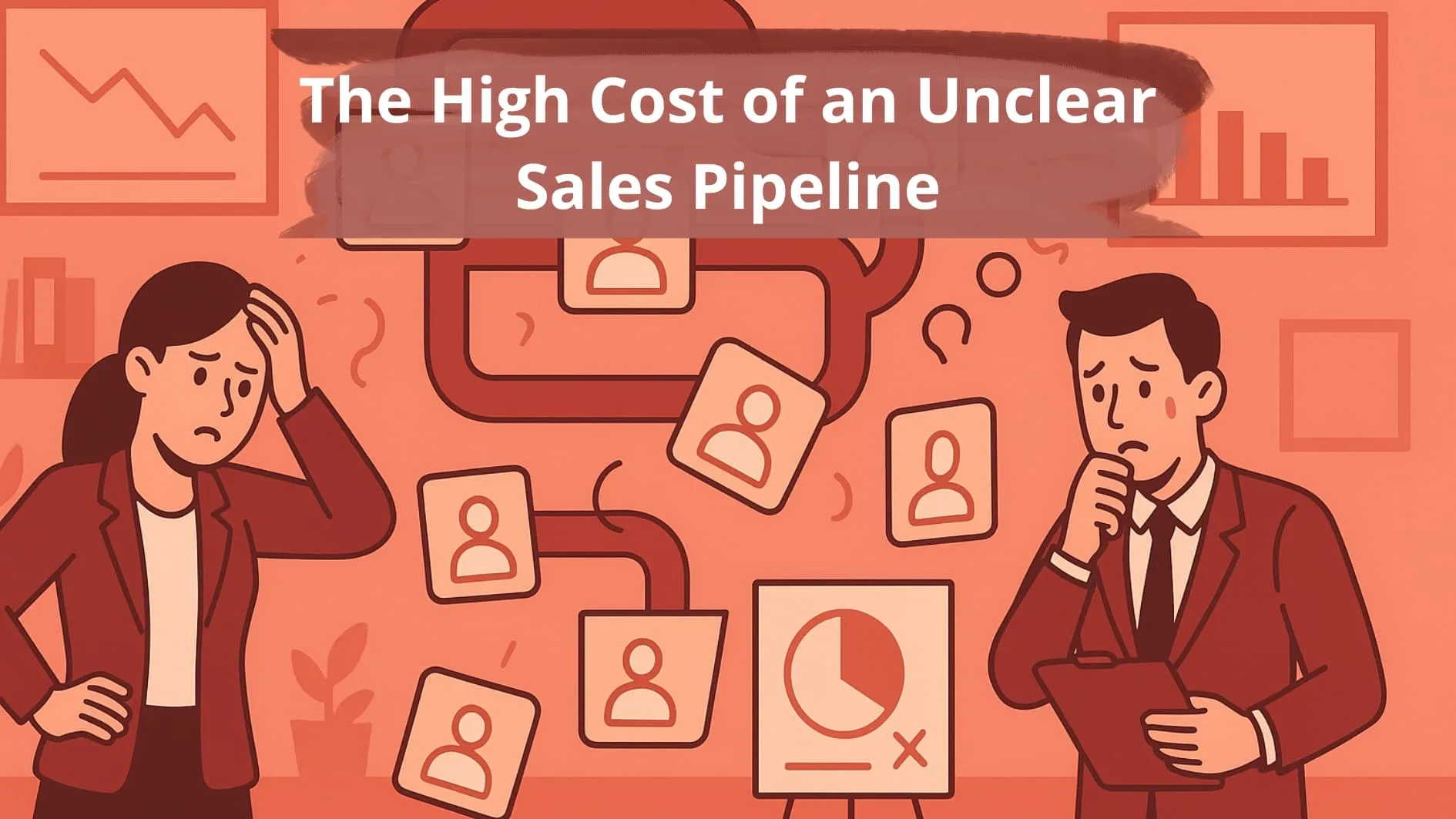
Many B2B sales teams struggle because their sales pipelines are messy. We’ve worked with companies that had plenty of leads but couldn’t tell which ones were worth their time. Some lost up to 25% of revenue just because leads were stuck or forgotten in the CRM, showing how focusing on qualified leads can prevent revenue leakage and keep the pipeline healthy.
In one case, a client had more than 100 “active” deals in the pipeline, but only 15 were actually alive. Their sales reps were spending time chasing ghosts, emails that never got replies, old proposals that went cold. Once we helped them clean it up and add clear pipeline stages, their conversion rate nearly doubled within a quarter.
That’s why fixing your sales pipeline isn’t optional, it’s the foundation of every reliable sales strategy.
Define Pipeline Stages That Match the Buyer’s Journey
Your sales pipeline should follow what the buyer does, not just what the sales rep does. We usually start by mapping out the buying journey, from awareness to decision.
A simple example looks like this:
Qualified Lead: The person fits your ideal customer profile and shows real interest.
Discovery Complete: We’ve had a call, and their pain points are clear.
Solution Fit Confirmed: Both sides agree that our product or service can solve their problem.
Proposal Delivered: A clear offer has been sent.
Negotiation: The deal is being discussed.
Verbal Agreement: Terms are accepted, pending final approval.
Closed: The deal is won or lost.
When sales teams use these clear pipeline stages, everyone knows where leads stand and what needs to happen next, making sales pipeline stages easier to track and optimize. It builds structure, improves forecast revenue, and helps the sales managers coach more effectively.
We often sketch these stages with both the marketing team and sales team in the same room. It’s easier to spot gaps that cause lost leads when everyone sees the whole picture.
Quick Tip:
Draw your sales pipeline stages together with your marketing and sales teams. Seeing it visually helps find where leads drop off.
Use Clear Rules for Moving Leads Forward
A big problem we often see is sales reps moving leads forward based on gut feeling. That’s how pipelines get inflated, full of leads that aren’t really ready. According to EmailToolTester, 41% of B2B marketers say that attracting quality leads is their most significant challenge.[1] That’s how pipelines get inflated, full of leads that aren’t really ready.
We’ve learned to rely on objective criteria. For example, to move a lead into “Solution Fit Confirmed”, we check:
Have multiple stakeholders confirmed the specific pain points?
Has the economic buyer acknowledged that our solution fits?
Do both sides agree on next steps or expected results?
This strategy ensures that every stage in your sales pipeline is accurate. It keeps forecasts realistic and focuses sales efforts on qualified leads that can actually close.
Quick Tip:
Write down what must happen before a deal can move forward. Train every sales rep to follow those rules. It keeps the sales process honest.
Know Your Ideal Customer Profile and Buyer Personas

If your team chases every contact, your sales pipeline fills with poor-fit prospects. That leads to frustration, burnout, and wasted time.
At Hyperke, we always start by defining the ideal customer profile (ICP), the company size, industry, and pain points that match your target market. From there, we build buyer personas that describe decision-makers: what they care about, what slows them down, and how they make choices.
We also look for intent signals, like recent activity on social media or interest in certain topics. When your team focuses on these signals, your lead quality improves and conversion rates rise.
Struggling to focus on the right leads? Solve it with our Lead Generation for Local Marketing Agency service.
Quick Guide:
Note what your best paying customers have in common.
Identify who signs the deals and why.
Use that info to prioritize leads and tailor your outreach.
This approach sharpens your B2B sales strategy and keeps your sales pipeline full of the right people.
Nurture Leads with Consistent Engagement
Leads almost never buy after the initial contact. They need time, trust, and reminders. That’s why lead nurturing is key in every strong B2B sales pipeline. Research notes that nurtured leads make 47% larger purchases than non‑nurtured leads.[2] They need time, trust, and reminders. That’s why lead nurturing is key in every strong B2B sales pipeline.
We use a mix of email campaigns, social media, and calls to keep in touch. Our sales reps follow a structured rhythm, not too pushy, but consistent. The goal is simple: stay top-of-mind until they’re ready to move forward.
Speed also matters. When a lead replies, our quick follow-up often makes the difference between winning and losing the deal. In one project, responding within 30 minutes doubled our conversion rate.
Tools that automate reminders and follow-ups make it easier to personalize messages while staying efficient.
Quick Tip:
Create a simple follow-up calendar. Use multiple channels, adjust your tone for each pipeline stage, and always offer something useful, not just a “checking in”.
Keep Your Pipeline Clean and Updated
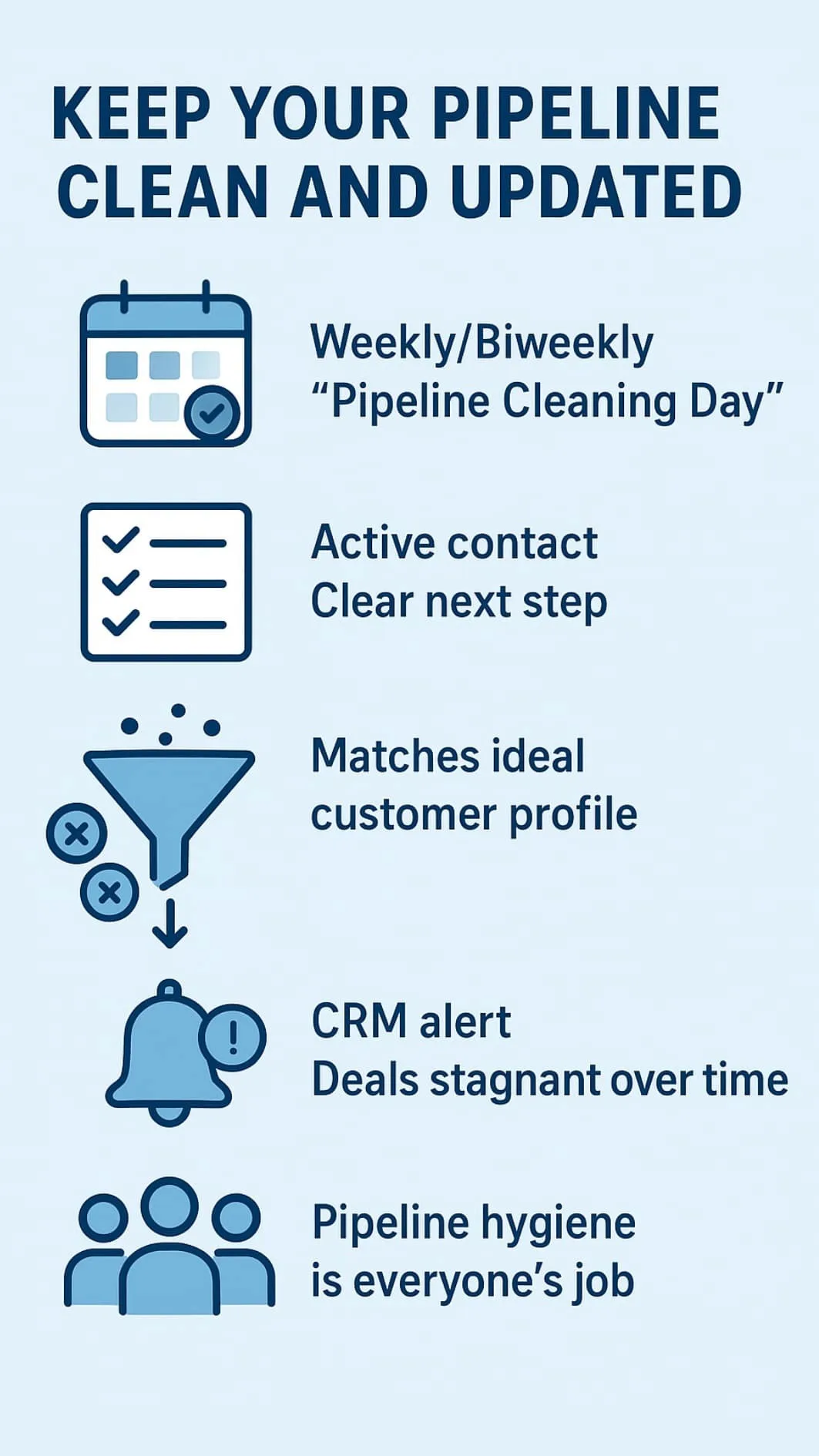
A healthy sales pipeline is like a clean workspace. Without regular care, clutter builds up, dead leads, missing info, or deals that go quiet.
We recommend a “pipeline cleaning day” every week or two. During that time, sales managers and reps review every deal:
Is the contact still active?
Is there a clear next step?
Does it still match our ideal customer profile?
By removing stale leads and updating details, your sales pipeline performance stays accurate. That helps with forecast revenue and keeps your sales team focused on quality leads.
Most CRMs today can even flag deals that haven’t moved in a while, helping you keep track automatically.
Quick Tip:
Pipeline hygiene is everyone’s job, not just the manager’s. A clean pipeline means a confident team.
Align Sales and Marketing Teams
Many companies struggle because their sales and marketing teams work separately. Marketing sends leads that sales ignore, or sales blame marketing for bad lead quality.
We’ve seen this divide too often. The fix is collaboration. When both teams define pipeline stages together, they start speaking the same language.
For example, the marketing team can create valuable content for the Awareness stage, articles, guides, or case studies that answer early questions. Then, the sales reps use that same content during personalized communication later in the sales funnel.
This teamwork makes the sales cycle faster and smoother. We’ve helped several B2B sales teams boost their pipeline velocity simply by aligning campaigns and messages.
Sales and marketing not in sync? Streamline efforts and boost conversions with our Wholesale Expansion service.
Practical Example:
During one campaign, our marketing team shared short social posts and email templates for the sales team. Leads moved from Awareness to Proposal 40% faster because both sides were synced.
Use Data to Improve the Pipeline
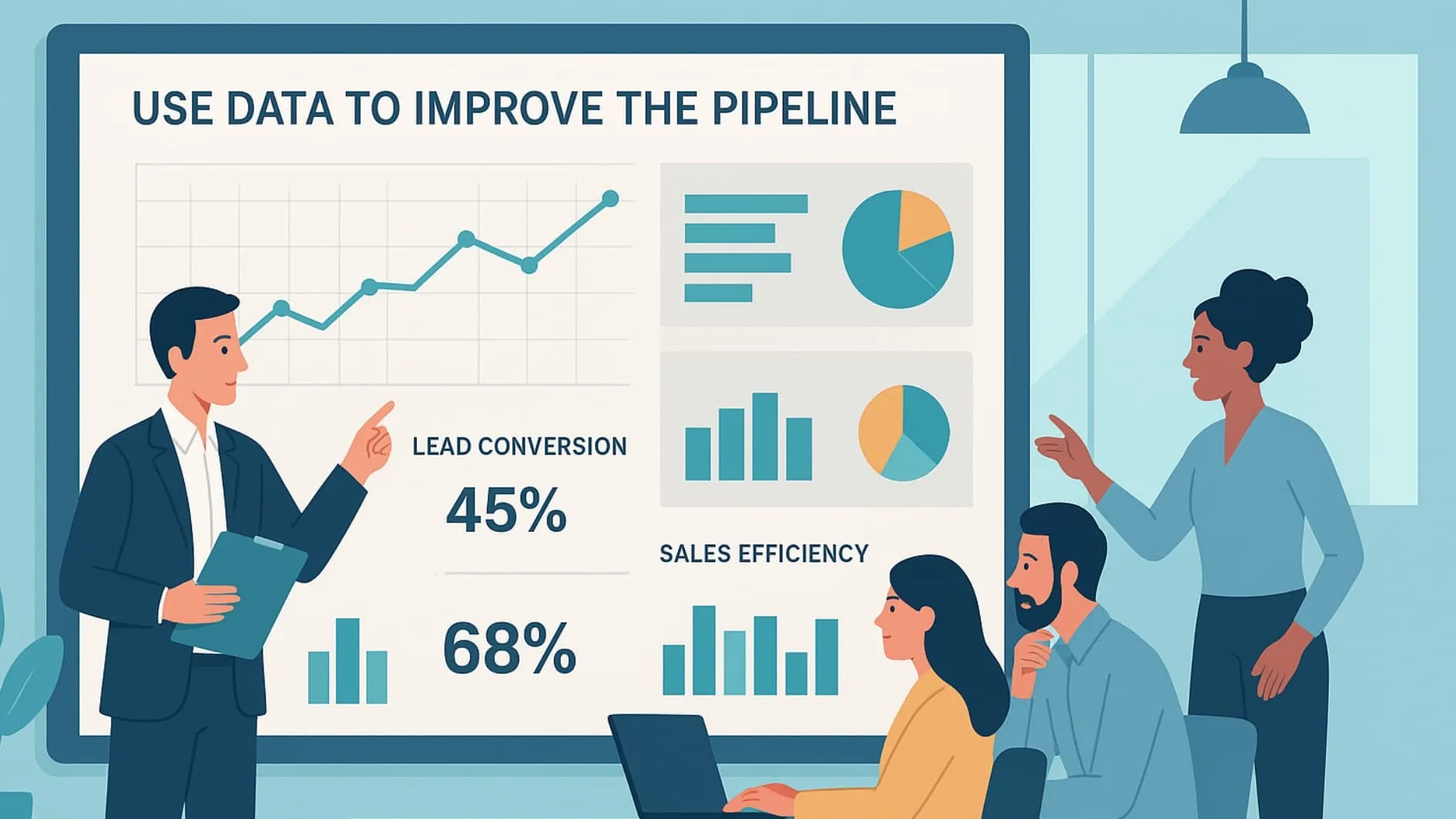
A B2B sales pipeline is never finished. We use data insights to keep improving.
At Hyperke, we hold weekly pipeline management meetings where the sales leaders review numbers: how many deals moved, what got stuck, and what our average deal value looks like.
These meetings aren’t just for reporting, they’re for learning. For example, if too many deals pause at “Proposal”, it may mean our offer or timing needs adjusting.
Tracking metrics like pipeline velocity, win rates, and conversion rate helps your sales strategy stay sharp, ensuring your pipeline performance is consistently improving. It also keeps sales reps accountable without micromanaging.
Final Tip:
Use a simple dashboard that everyone can see. When your sales team understands the numbers, they take more ownership of results.
FAQ
What are the key steps to building a strong B2B sales pipeline?
At Hyperke, we start with clear sales goals and knowing our ideal customer profile. Our B2B sales strategy brings marketing and sales teams together to qualify leads early. We track data insights daily to improve lead quality, which builds trust and shortens our sales cycle while boosting win rates.
How can sales reps improve lead generation and nurture leads better?
Our sales reps focus on understanding pain points and sharing useful content on social media. We've found that personal follow-ups after initial contact help guide leads through the sales funnel better. This approach consistently brings in qualified leads and keeps our conversion rates high.
Why do sales leaders track sales pipeline stages closely?
Through tracking pipeline stages, our sales leaders see exactly where deals stand and can forecast revenue better. It shows where leads slow down, letting sales teams adjust their approach. Good pipeline management keeps deals moving and helps our sales managers improve performance.
How does lead qualification improve the overall sales strategy?
We focus on quality leads that match our ideal customer profile and need our product or service. This cuts wasted sales efforts and shortens sales cycles. Using sales intelligence tools with case studies helps us prioritize leads and increase our average deal size.
What are the best practices for keeping B2B sales pipelines healthy?
We maintain clean data, follow up consistently, and keep sales content fresh. Our sales and marketing teams align strategies and review success stories monthly. These practices drive revenue growth, strengthen customer relationships, and ensure steady repeat business.
Conclusion
Building a strong B2B sales pipeline is not about fancy tools or new trends. It’s about discipline, clarity, and care. When your team understands each stage, focuses on qualified leads, and maintains clean data, your win rate rises naturally.
At Hyperke, we’ve seen firsthand how structure creates predictable growth. Chat with Hyperke today and start building a pipeline that helps your sales team close more deals with confidence and consistency.
References
https://www.emailtooltester.com/en/blog/lead-generation-statistics/
https://www.invespcro.com/blog/lead-nurturing/