
Reaching C-level executives in B2B sales is not easy, but it’s possible when you focus on what they care about most, results. Executives don’t want long pitches about features, they want to know how you’ll help their company grow, save time, or make money.
We’ve learned this from years of doing it ourselves. In this guide, we’ll share simple, proven ways to connect with top leaders and build a stronger sales pipeline. Keep reading to learn how.
The Challenge: Reaching Busy Executives

Getting the attention of C-level executives is one of the biggest challenges in pipeline generation, especially when generic messages get ignored. These are people who manage large teams and have little time for generic messages. Most salespeople send too many cold emails hoping for luck, but that rarely works.
We’ve seen this mistake many times. Instead of sending hundreds of messages, the better way is to focus on quality, understanding the executive’s world, their goals, and how your offer supports them.
For example, one of our SaaS clients wanted to reach finance executives. Their first outreach focused on software features, and it didn’t work. We helped them shift the message to talk about saving reporting time and improving visibility. Within six weeks, their response rate jumped by 45%.
Executives don’t respond to sales talk, they respond to clear, outcome-focused value.
Strategy 1: Define Your Ideal Customer Profile (ICP)
The best way to build a strong sales pipeline is to know exactly who you’re targeting. This is called your ideal customer profile (ICP). It helps your team focus only on the right companies and decision makers.
At Hyperke, we always start here. We look at:
Industry: Where your product or service fits best
Company size: Who can afford and benefit most from what you offer
Decision makers: Who actually says “yes”, CEO, CFO, or COO
Pain points: What’s slowing them down
Buying triggers: When they are most likely to make changes (like funding rounds or new leadership)
One SaaS analytics client of ours used to target everyone. Once we narrowed their ICP to mid‑sized firms automating finance processes, they started booking higher‑quality meetings and closing deals faster. According to a 2024 study of B2B content use, 70% of B2B marketers rely on lead conversion as a key metric and companies with highly‑targeted outreach grow 60% faster than those without.[1]
A clear ICP helps every salesperson spend time wisely and build a pipeline that converts.
Strategy 2: Align Your Sales and Marketing Teams
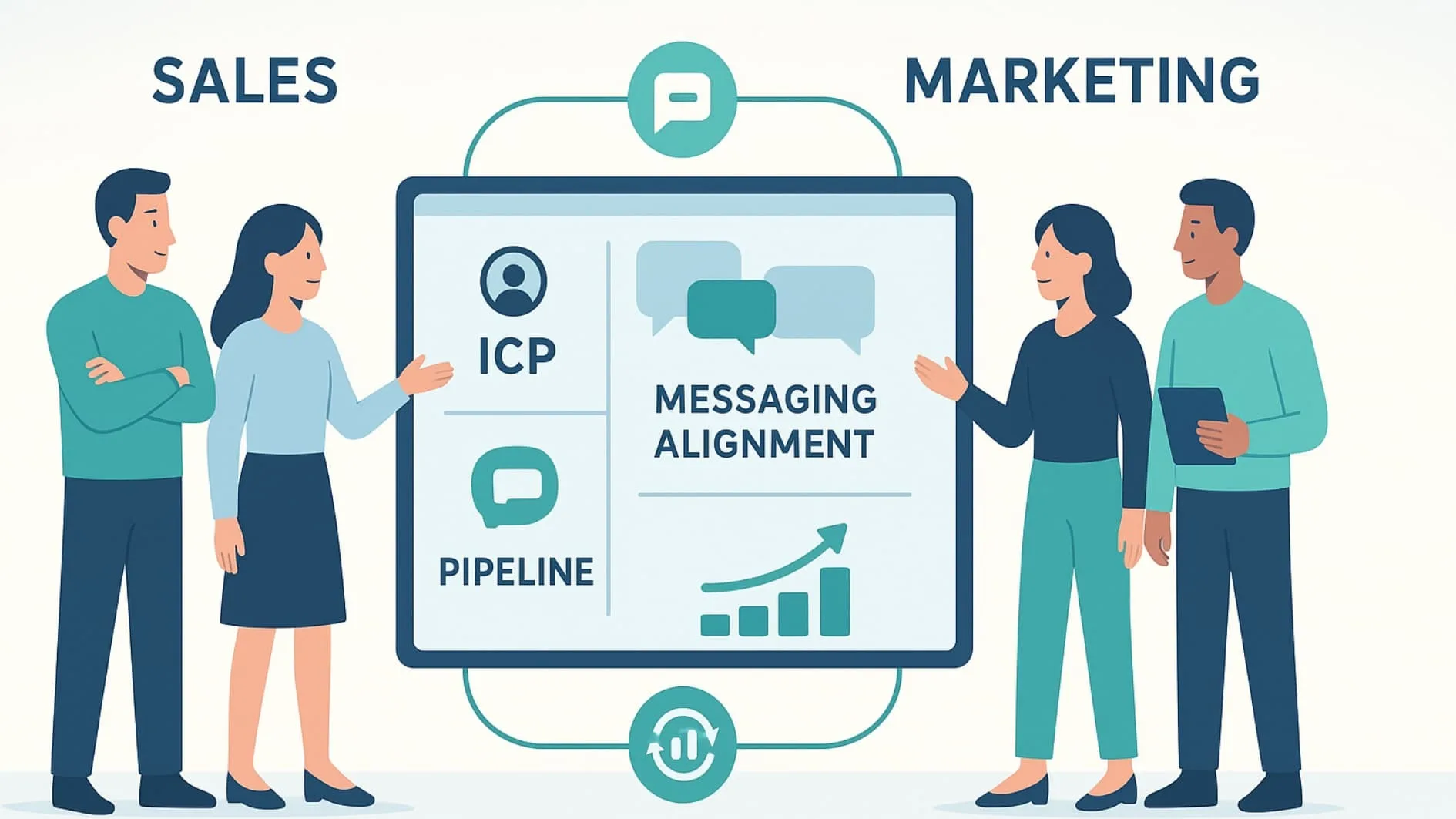
Many companies struggle with pipeline generation because their sales and marketing teams don’t work together. Sales blames marketing for poor leads. Marketing blames sales for not following up.
At Hyperke, we’ve seen how simple changes fix this. When sales leaders ensure their teams work toward shared strategic objectives, everything becomes smoother, and the pipeline becomes more predictable.
Here’s how we help our clients align:
Set shared KPIs based on revenue, not clicks or opens
Define what a “qualified lead” really means
Keep feedback loops open, marketing learns from sales, and vice versa
Use one shared dashboard so everyone sees the same numbers
We helped one SaaS company do this, and within three months, their conversion rate grew by 35%. When teams share the same goal, the pipeline becomes more predictable.
Strategy 3: Sell by Solving Problems, Not Pushing Products
When you talk to C-level executives, you can’t just pitch your product. You need to show that you understand their business and can help solve real problems. This is called consultative selling.
Here’s how we practice it:
Start with insights: Share data or market trends that affect their business.
Reframe the pain: Show how the problem connects to lost time or money.
Prove it: Use real case studies or data.
Ask smart questions: Let them explain their challenges in their own words.
We once trained a sales development team that used one script for everyone. After switching to a consultative approach, their response rate doubled. Instead of saying “Here’s what we do,” they started saying “Here’s what we noticed in your industry, is this a problem for you too?”
Executives appreciate conversations that help them think differently. If you want to earn their trust, focus on their strategic goals, not your software features.
Not sure how to turn suite executives’ pain points into actionable solutions? Check our Wholesale Expansion service to help your team craft personalized outreach that drives sales engagement.
Strategy 4: Personalize Every Message and Follow-Up
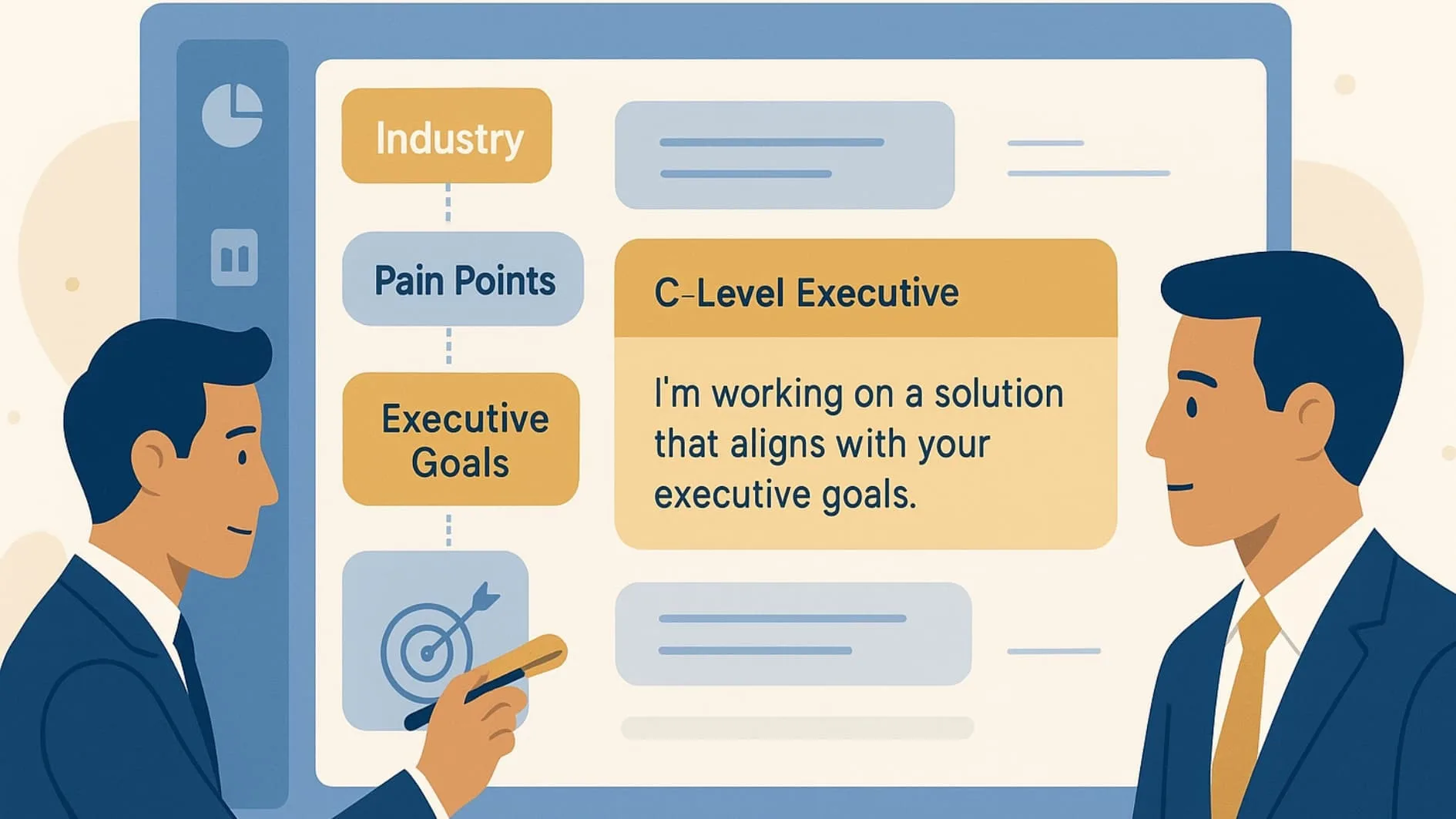
Personalization is what makes your message stand out. C-level executives get hundreds of emails every week, so you need to show that you’ve done your homework.
When we craft messages for our clients, we don’t use templates. We research each company and leader, their latest projects, interviews, and posts. Every email we send includes something specific to them.
Here’s how to personalize effectively:
Mention something real, “I saw your company’s new funding round…”
Keep it short and natural, 3-5 sentences is enough
Add insight, share data or a quick suggestion that’s useful
Always follow up with value, not reminders
We also use social selling before outreach. Commenting thoughtfully on a post or sharing a helpful article can warm up the connection. A 2025 study found that 89% of B2B marketers use LinkedIn for lead generation, and the platform can deliver conversion rates up to double those of other social channels.[2] Commenting thoughtfully on a post or sharing a helpful article can warm up the connection.
One client of ours reached a COO this way, by commenting on her LinkedIn post about scaling operations. When the next email came, she replied the same day.
Real personalization takes time, but it creates genuine relationships and faster replies.
Strategy 5: Plan for Pipeline Growth and Consistency
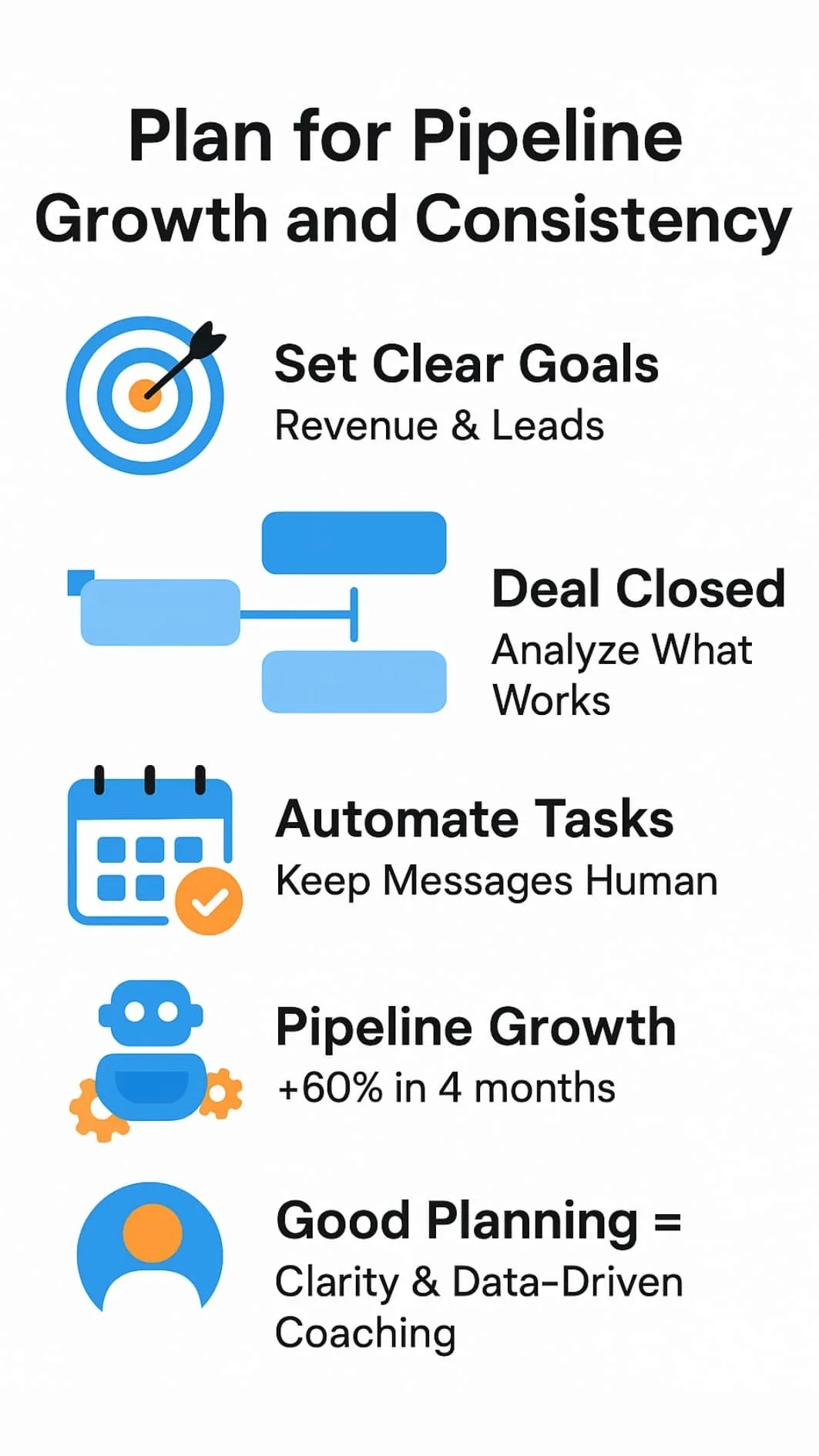
A strong sales pipeline doesn’t happen by chance. It grows from a consistent pipeline filling and careful planning to track every stage effectively.
At Hyperke, we help clients plan their pipelines like this:
Set clear goals: Know how much revenue you want and how many leads it takes to get there.
Break it down: Track every stage, from first contact to deal closed.
Review weekly:. Look at what works and what doesn’t.
Automate carefully: Use tools for repetitive tasks but keep messages human.
For example, one SaaS startup we worked with had many leads but no system. We helped them track progress at every stage and test different follow-ups. In four months, their pipeline grew by 60%.
Good planning turns confusion into clarity. It also helps sales leaders coach their teams with real data instead of guesses.
How Executive Relationships Speed Up Sales
The closer you are to C-level executives, the faster your deals move. Executives can make decisions quickly if they trust you and see clear business value.
To reach them, we often map out who really makes decisions inside a company. Sometimes it’s not the person you expect.
For example, a SaaS company we supported thought the CTO was the buyer for their analytics tool. After a few conversations, we found the CFO actually owned the budget. Once we tailored the message to focus on saving costs, deals started closing 30% faster.
That’s the power of knowing your decision makers. When you connect with the right people using the right message, your sales cycle shortens and your pipeline becomes stronger.
Worried your sales cycle is too long? Check our Lead Generation for Local Marketing Agencies service to build strong relationships and close deals faster.
Quick Summary
Strategy | What It Does | How It Helps |
Define Ideal Customer Profile (ICP) | Focuses on the right decision makers | Saves time and improves conversions |
Align Teams Internally | Gets sales, marketing, and success teams on the same goals | Creates a smoother sales process |
Use Consultative Selling | Solves real executive problems | Builds trust and credibility |
Personalize Communication | Customizes outreach for each leader | Boosts sales engagement |
Plan for Pipeline Growth | Keeps leads moving and measurable | Ensures steady revenue growth |
FAQ
How can sales leaders reach suite executives more effectively in B2B sales?
From our experience, sales leaders see better results when they focus less on aggressive sales pitches and more on understanding real pain points. Suite executives care deeply about business outcomes and strategic objectives, not just product features. Using social selling and sharing useful industry trends helps them achieve trust faster. Building relationships through thoughtful sales engagement leads to long-term sales success.
What role does lead generation play in pipeline generation for level executives?
Lead generation is the foundation of strong pipeline generation. When we identify the ideal customer and key level decision makers early, we can tailor our approach and improve conversion rates. Suite selling also helps by connecting sales and marketing efforts, turning warm leads into real opportunities. These effective strategies drive consistent revenue growth and improve operational efficiency for better business outcomes.
How can sales development teams handle unique challenges in selling to decision makers?
Selling to suite executives requires patience and a clear strategic approach. Many sales development teams struggle because they do not align their sales operations with their strategic objectives. Sharing case studies that show measurable business growth helps create trust. We’ve learned that when sales leaders focus on specific pain points and present a compelling business case, sales cycles become shorter and more successful.
How do social media and social selling support suite selling and sales engagement?
We’ve used social media as a powerful way to connect with level executives before starting any sales conversation. Sharing thought leadership posts and insights about a product or service helps establish credibility. When done right, social selling allows us to build strong relationships naturally. It’s one of the most effective strategies for improving sales engagement and driving better pipeline generation results.
Why should sales and marketing teams align to reach suite executives successfully?
When sales and marketing teams share the same goals, sales operations become more efficient, and the sales cycle moves faster. Executives require clear data and actionable insights to make confident decisions. Aligning both teams helps them achieve shared objectives and deliver high-impact results. This coordination also creates a competitive advantage, supports long-term business growth, and improves overall conversion rates.
Conclusion
At Hyperke, we’ve helped SaaS and service companies help them achieve consistent revenue growth by combining lead generation, social selling, and consultative outreach.
Developing a B2B sales pipeline for C-level executives isn’t about sending more emails, it’s about sending the right ones. Start by identifying your ideal customer, align your internal teams, and use a strategic approach grounded in insights and personalization. Keep refining your sales strategies with real data and practical adjustments.
Struggling to engage C-level executives effectively? Chat with Hyperke and start converting leads into consistent revenue growth with personalized, insight-driven strategies.
References
https://www.orengreenberg.com/blog-post/75-b2b-marketing-statistics-for-2024/
https://sopro.io/resources/blog/linkedin-lead-generation-statistics/