Getting sales pipeline forecasting accuracy right means knowing what revenue your sales team will actually bring in, not just what looks good on paper. When forecasts match real outcomes closely, everyone from sales reps to finance teams can make smarter moves. We’ve seen how poor data and human bias can make forecasts overly hopeful or too low.
That’s why cleaning CRM data, using AI forecasting tools, and keeping sales and marketing in sync works well to improve accuracy. If you want to build reliable sales forecasts that guide your B2B company’s growth, keep reading.
Key Takeaways
Clean and accurate CRM data is the base for reliable sales forecasts.
Sales and marketing working together sharpens forecast assumptions and pipeline health.
Regular forecast reviews plus AI analytics help spot risks and adjust revenue projections early.
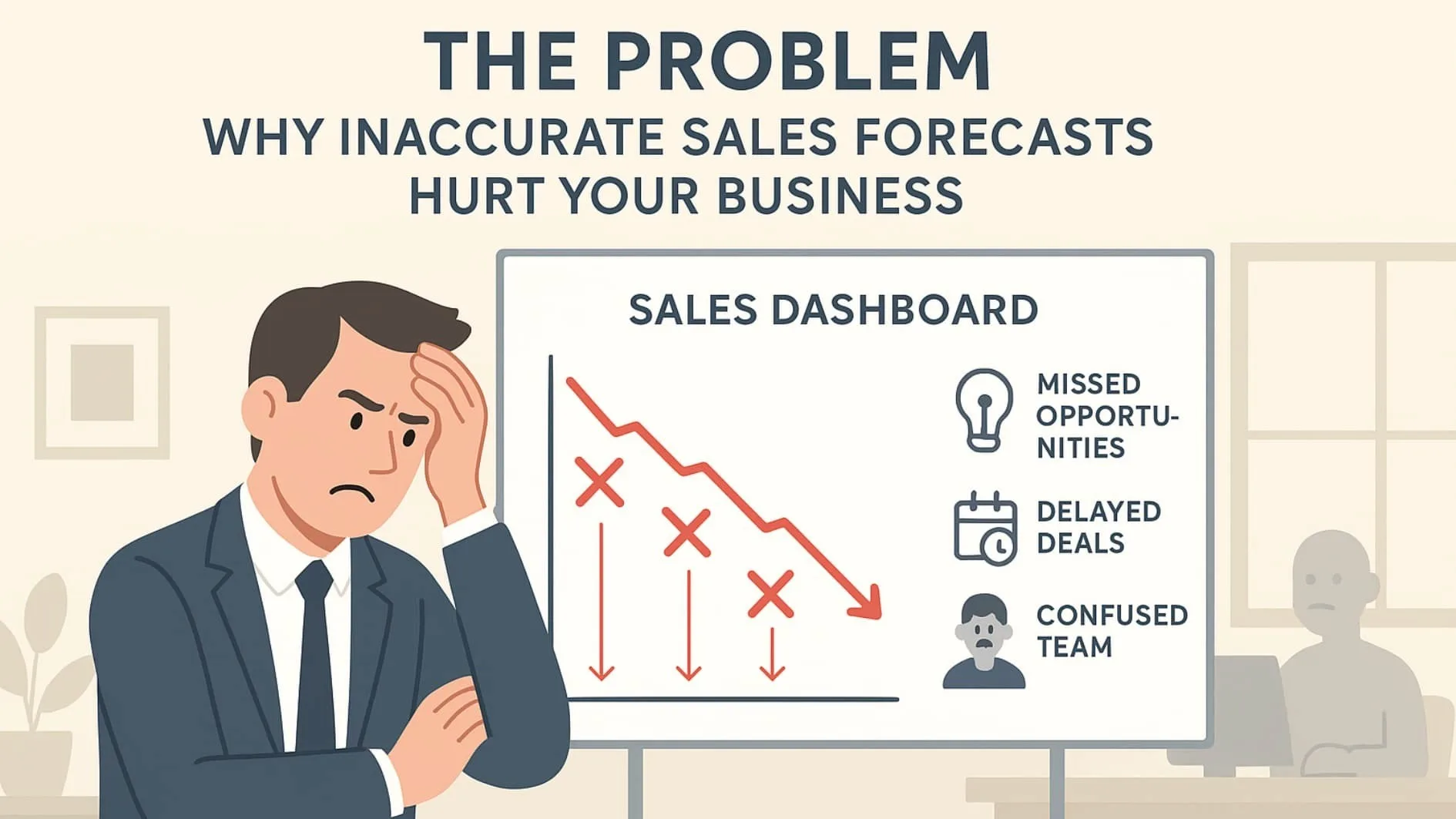
The Problem: Why Inaccurate Sales Forecasts Hurt Your Business
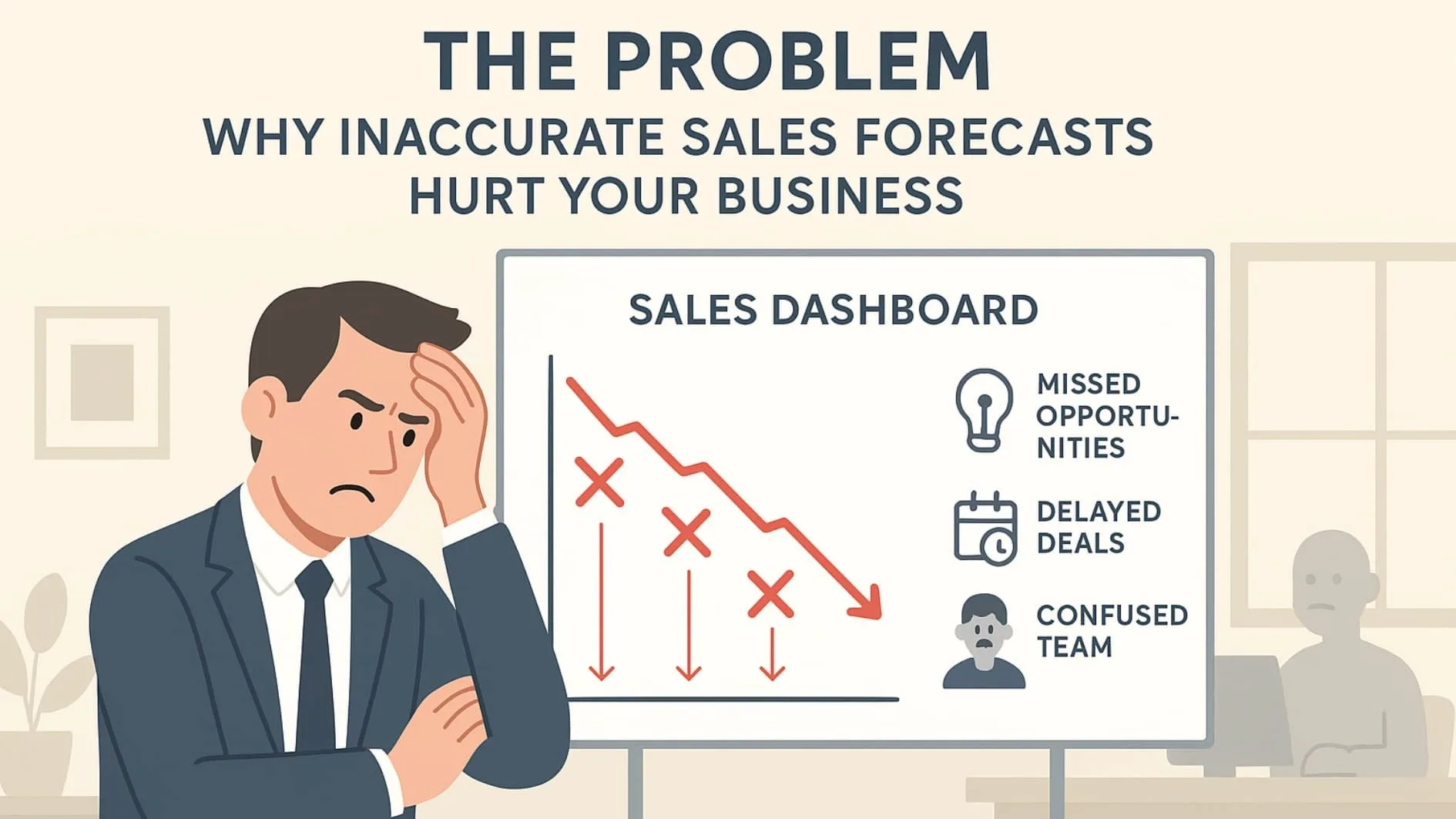
Here's what we see every day working with B2B sales teams - when sales predictions are wrong, it hurts everyone. Think about it: sales leaders look at these wrong numbers and make plans that won't work. The money people can't plan cash flow right.
Sales managers push their teams to chase deals that probably won't happen. And marketing? They're left guessing which campaigns actually bring in sales. Even the top bosses make big decisions using numbers that just don't match reality.
Here's how bad it gets, we've watched companies miss their sales goals by 20 to 40 percent because their numbers were wrong. According to a 2024 Gartner survey, 55% of organizations reported their sales forecasts were frequently inaccurate, highlighting widespread challenges in prediction.[1]
Sometimes nobody's updating their CRM records when things change. Other times, it's just human nature, sales reps want to look good, so they make their deals look bigger or say they'll close later than they really will. Add in messy CRM data and everyone doing things their own way, and you've got a real problem.
When your predictions are off, nobody knows what's really going on. You can't set goals that make sense or spot problems before they blow up. Your pipeline might look good at first glance, but dig deeper and you'll see the truth. Worst case? Everyone scrambles at the last minute trying to hit their numbers. Best case? You could be using good predictions to make smart choices about where to spend time and money.
Key Steps to Boost Accuracy
Step | Description | Benefit |
Clean Your Pipeline | Remove stale, unrealistic deals. | More realistic forecasts, better resource focus. |
Leverage AI & Analytics | Use tools to analyze data and predict outcomes. | Refined predictions, identify hidden trends. |
Align Sales & Marketing | Unified definitions, shared metrics, joint reviews. | Improved lead quality, consistent messaging. |
Regular Review Cadences | Weekly/monthly/quarterly forecast reviews. | Early identification of risks, proactive adjustments. |
Consistent Methodologies | Standardized processes across teams. | Uniformity, easier tracking and analysis. |
Automate Data Quality | Automate CRM data accuracy. | Reduced errors, reliable data for forecasting. |
Task 1: Cleaning Your Sales Pipeline
At Hyperke, we've learned that a clean sales pipeline directly impacts forecast accuracy. After working with numerous B2B companies, we've seen sales teams cling to cold deals, which makes pipeline data overly optimistic. This is especially true in complex sales cycles, where deals might sit inactive for months.
Here's what works: create simple deal qualification rules. When a deal shows no sales activities (no calls or email engagement) for 30 days, flag it for review or mark it as unlikely to close. This keeps CRM records accurate and strengthens your pipeline management process, ensuring forecasts reflect real opportunities instead of outdated deals.
We hold regular pipeline reviews with each sales rep. These check-ins, done monthly or quarterly, ensure accurate data capture and build confidence in sales forecasts. Without them, sales leaders end up working with poor data, leading to poor forecast choices.
Task 2: Leveraging AI and Analytics for Smarter Forecasting

Manual forecasting isn't enough anymore. AI forecasting examines historical sales data, current pipeline stages, and market trends simultaneously. The machine learning models catch patterns in time series data that humans often miss.
Our AI tools track market volatility and customer behavior changes in real time. When market shifts affect sales cycles, the models automatically adjust future sales projections.
We've integrated AI-powered analytics with our outbound sales strategies. This improves deal scoring accuracy, helping sales reps focus on high-potential opportunities. Remember though, AI only works well with clean CRM data.
Regular data cleaning combined with human oversight produces the best forecasts and helps shorten the sales cycle by focusing efforts on high-potential opportunities.
Task 3: Aligning Sales and Marketing for a Unified Approach
In B2B sales, misalignment between sales and marketing creates forecast problems. Different definitions for leads, pipeline stages, or forecast categories cause confusion.
We create clear definitions for leads, opportunities, and sales pipeline stages. Marketing understands what makes a sales-ready lead, while sales reps know exactly where deals belong in the pipeline. This alignment improves lead-to-opportunity conversion rates and forecast accuracy.
Our sales data and market trends flow between sales and marketing teams. Marketing adjusts campaigns using sales feedback about customer success and pipeline health. Joint forecast reviews help spot risks early and set realistic revenue goals. A recent McKinsey study found that AI-enabled analytics can increase sales efficiency by up to 50% when combined with clean data and structured processes.[2]
Task 4: Establishing Regular Forecast Review Cadences
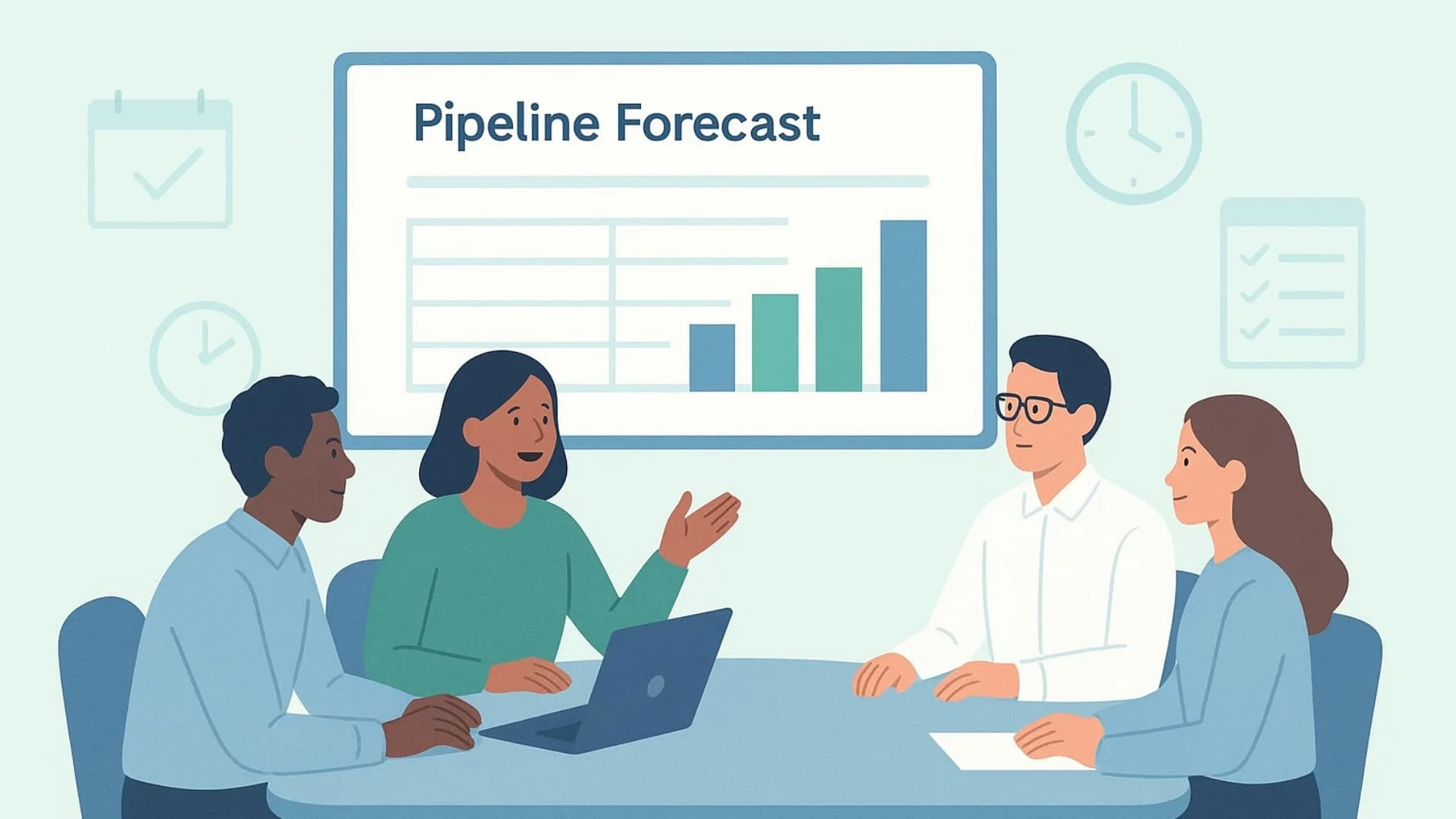
Here at Hyperke, we treat forecasting like a daily workout, not a quarterly chore. Our proven approach includes weekly, monthly, and quarterly reviews that keep sales data fresh and accurate.
Weekly check-ins zero in on immediate pipeline changes. Our sales managers watch deals move through pipeline stages and match weighted pipeline numbers against actual outcomes. This helps catch any deals that might be stuck or need attention.
Monthly and quarterly reviews look at the bigger picture, market shifts and sales cycle changes. Our sales leaders and revops teams update forecasting models based on what's happening in the market right now. We bring finance teams into these discussions to line up revenue forecasting with cash flow planning, reinforcing a consistent sales process across organization.
Task 5: Implementing Consistent Forecasting Methodologies
In B2B sales, we've noticed many sales organizations struggle when different sales reps use different forecasting methods. This makes it nearly impossible to trust the data or compare results across teams.
Our solution? We document every step of the forecasting process clearly. Each sales rep gets trained on proper data entry, and we use standard deal categories in our CRM systems. This consistent approach to data capture makes it easier to spot trends and predict future sales.
We've built a defined sales process with clear pipeline stages that everyone understands. Sales reps know exactly what moves a deal forward, making their forecasts more reliable. This allows sales managers to coach based on real data, not guesswork.
Task 6: Automating Data Quality Workflows
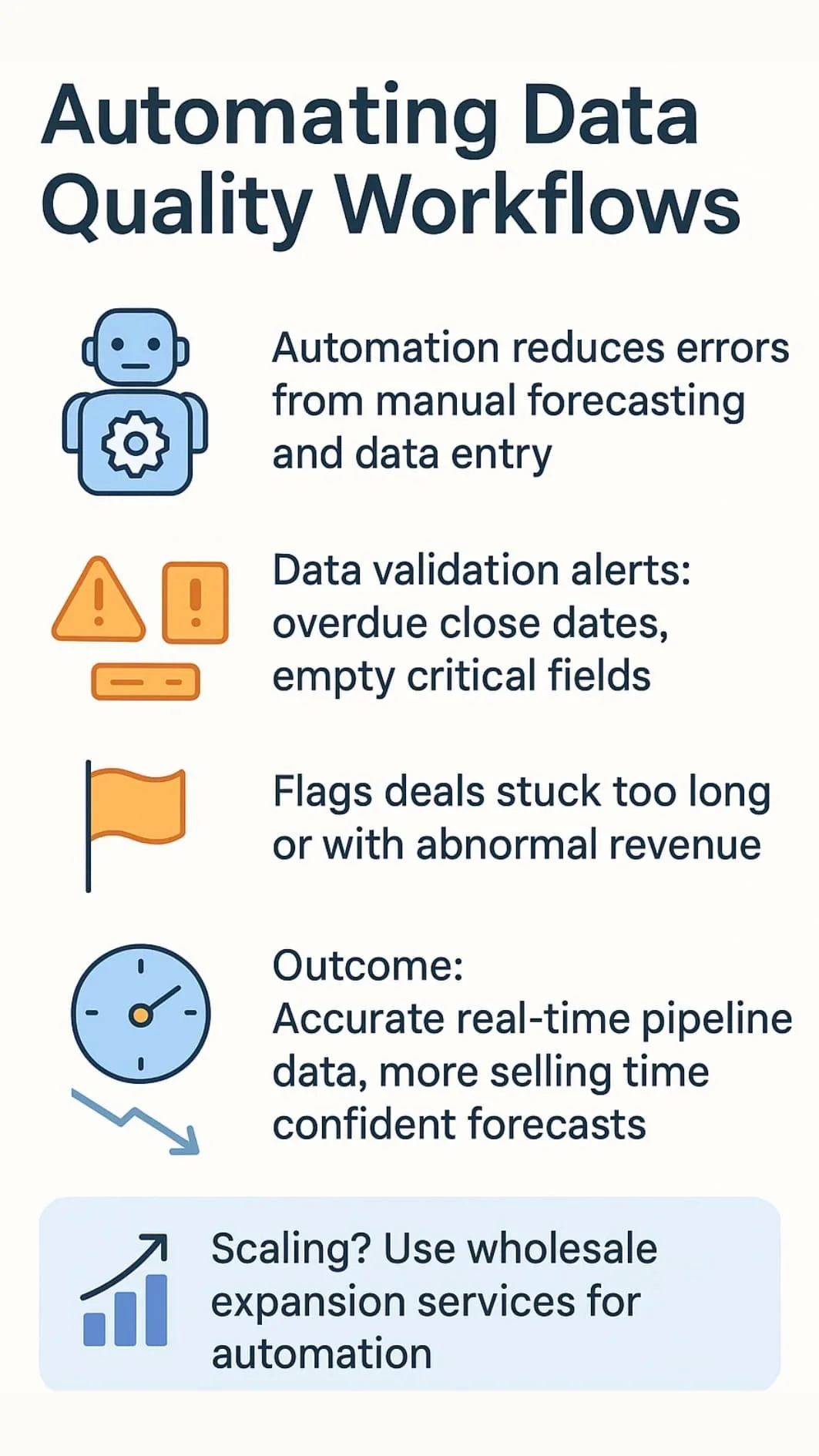
Manual forecasting and data entry bring human error. Automating data quality in your CRM cuts mistakes and improves forecast accuracy.
You can set up data validation rules that alert sales reps if expected close dates are overdue or if important fields are empty. Automation can flag deals stuck too long or with strange revenue numbers.
This cuts poor data and keeps pipeline information accurate in real time. Sales reps spend less time fixing errors and more time selling. Reliable forecasts help sales leaders and revenue teams build confidence in revenue planning.
If you’re scaling into new markets, explore our wholesale expansion services to automate data quality and streamline forecasting accuracy.
FAQ
What is the role of CRM data and sales data in forecasting sales pipeline accuracy?
Good records are key to knowing what's coming down our sales pipeline. Our sales reps put every customer interaction into our CRM system, from first email to final handshake. This helps us see patterns, like which deals usually close and which ones tend to fall through. When everyone keeps good records, we can make solid plans. But messy data leads to messy forecasts, so we're pretty strict about keeping our CRM clean.
How do sales leaders and revenue operations teams improve sales forecasting accuracy?
Our sales leaders team up with our operations folks to look at three main things: past performance, current deal strength, and sales rep activities. We track how fast deals move from stage to stage and how many actually close. This helps us make realistic goals instead of wishful thinking. Our managers check the pipeline every week to spot any red flags early.
What challenges do sales teams face with pipeline management and forecasting methods?
The biggest headaches? Long sales cycles and unpredictable markets. Even with great data, things like sudden market changes can throw off our best guesses. Sometimes our sales team gets too excited about deals that aren't quite ready. But we've found that sticking to a solid forecasting process and double-checking our gut feelings against real numbers helps keep us honest.
How can companies predict future sales and ensure reliable revenue forecasting?
We mix old-school sales wisdom with new tech like AI forecasting tools. It's about watching both the big picture (like market trends) and the details (like how individual deals are progressing). This gives our sales teams real insights they can use, not just fancy reports. The goal is simple: know what's coming so we can plan better.
Conclusion
Improving sales forecast accuracy doesn’t have to be hard. When sales teams keep their information organized and use the right tools, they can better predict their future sales. No more confusion about which deals will close. It's like having a clear map, teams can see what deals need attention and how much money they'll likely make. Regular team check-ins help catch problems early. With good habits, sales teams can plan better and avoid end-of-quarter panic.
Ready to see how better forecasting can fuel your revenue growth? Book a demo with us at Hyperke and let’s get your sales pipeline working for you.
References
https://www.gartner.com/en/newsroom/press-releases/2024-sales-forecasting-benchmark
https://www.mckinsey.com/capabilities/growth-marketing-and-sales/our-insights/the-state-of-ai-in-sales-2024